


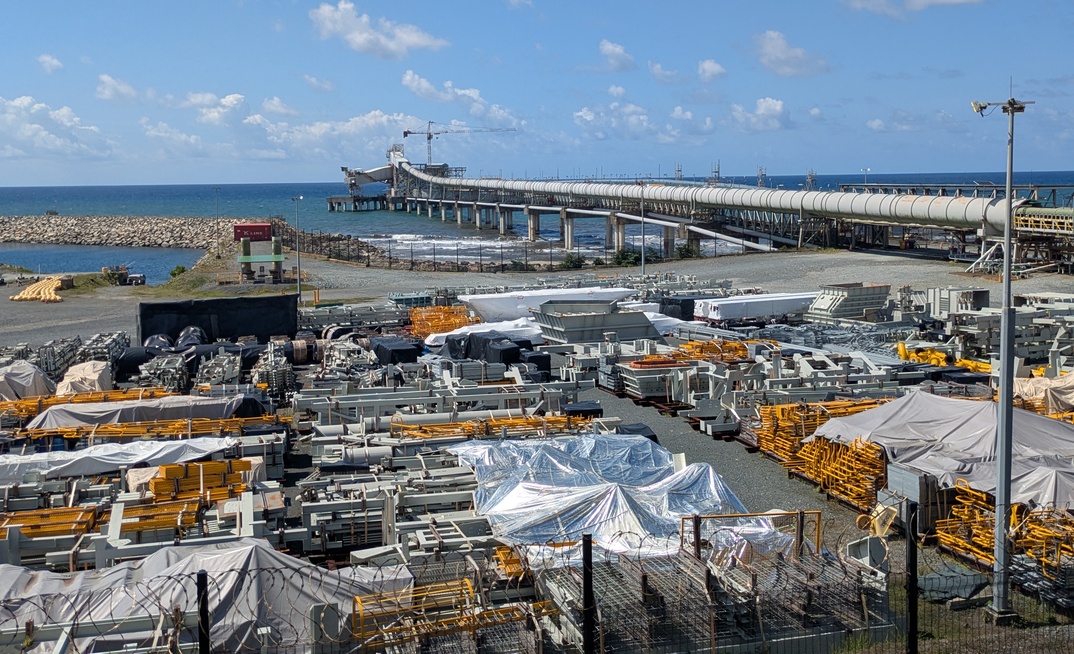
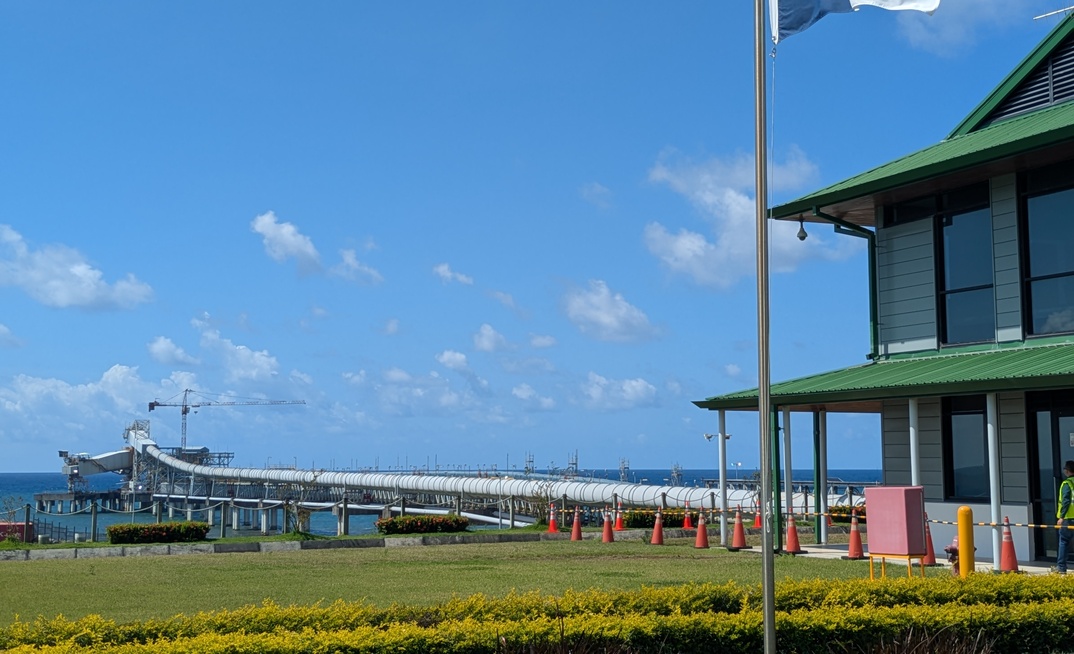


The sea breeze takes the edge off the midday heat as the sun beats down on the turquoise Caribbean waters that form the picture postcard setting of Cobre Panama's Puerto Rincon concentrate export facility in Panama.
A flight of pelicans glides over the silent concentrate loader that may be brought back to life in the coming weeks or months, the first activity of a sleeping industrial giant since an abrupt shutdown in late November 2023 that stunned the copper world and saw Panama hit with more than US$50 billion in arbitration claims.
Mining Journal first visited Cobre Panama in August 2017 when the mine was under development. After declaring commercial production in 2019, it operated for a few short years of a 34-year initial mine life before the government shut the mine following public protests, stranding 120,000t of stockpiled concentrate, millions of tonnes of unprocessed material, 7000 direct workers, up to 50,000 indirect workers.
Relations between the government and the company are thawing, with Panamanian president Jose Mulino giving permission to export the concentrates and First Quantum dropping its arbitration proceedings. A full mine restart may politically be a possibility somewhere over the hazy horizon, but is it still possible? Mining Journal toured the site with operations manager Carlos Hubner to see the impacts of 16 months of downtime and whether a restart is possible at all.
YOU MIGHT ALSO LIKE
Concentrate
The technical task facing First Quantum at Cobre Panama is huge, singular and potentially unsurmountable, given the many known and unknown challenges management will have to address, assuming, of course, that a restart is politically and publicly possible in the first place.
The export of the 120,000t of copper concentrates valued at about $250 million will test the waters of the relationship between the company and government and, critically, the public's reaction. Sale of the concentrates would help pay First Quantum's care and maintenance bill at the site and would provide much-needed revenue to the government, although how taxes are calculated would need to be addressed given the Supreme Court ripped up the 2023 contract.
If completed, both Mulino and First Quantum may be able to claim a public relations victory in having acted in Panama's best interest by removing one potential environmental liability.
Exporting the concentrates will not be quick or easy, however, with a litany of things to happen before vessels can again call at Puerto Rincon. This will be a microcosm of the enormity of the mine restart process.
The Ministry of Industry and Commerce has to issue an export permit for the concentrates, the export terminal needs to renew its accreditation, and First Quantum needs to find and book bulk concentrate carriers and obtain power to run everything.
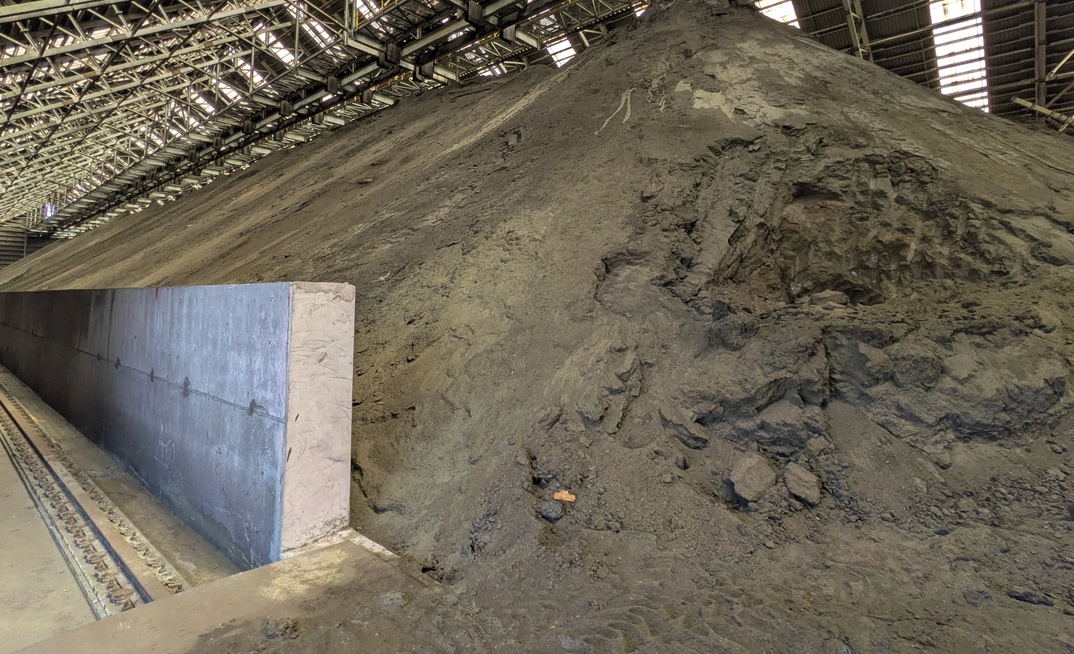
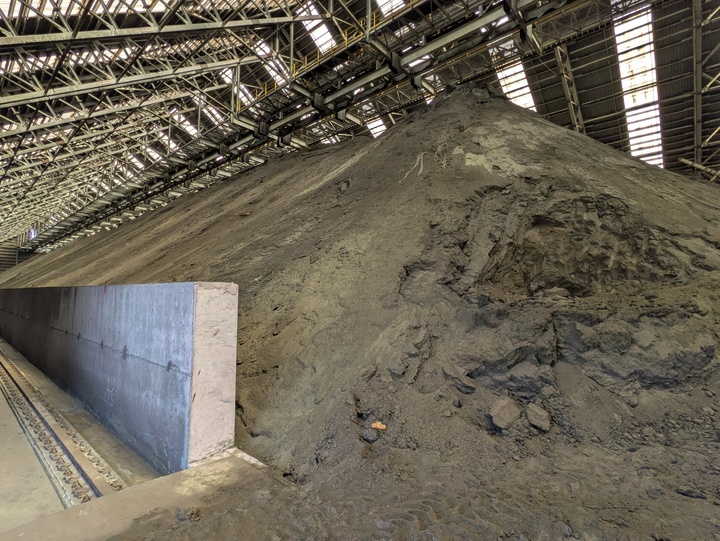
The concentrate storage shed is full. With each shipment amounting to about 33,000t, a full warehouse will take at least four shipments to clear. Among the unknowns are whether local fishermen will blockade the port as they did in 2023, and if they do, will the government remove them?
The port operation has no impact on local fisheries, and it is believed that those who participated in the blockade were politically motivated ahead of Panama's presidential election in early 2024.
The condition of the concentrates is a concern. Copper concentrates are usually stored for up to 12 weeks before shipment, not 16 months. Grade deterioration does not appear to have occurred as government testing produced similar results as First Quantum data, but time has had impacts that must be addressed.
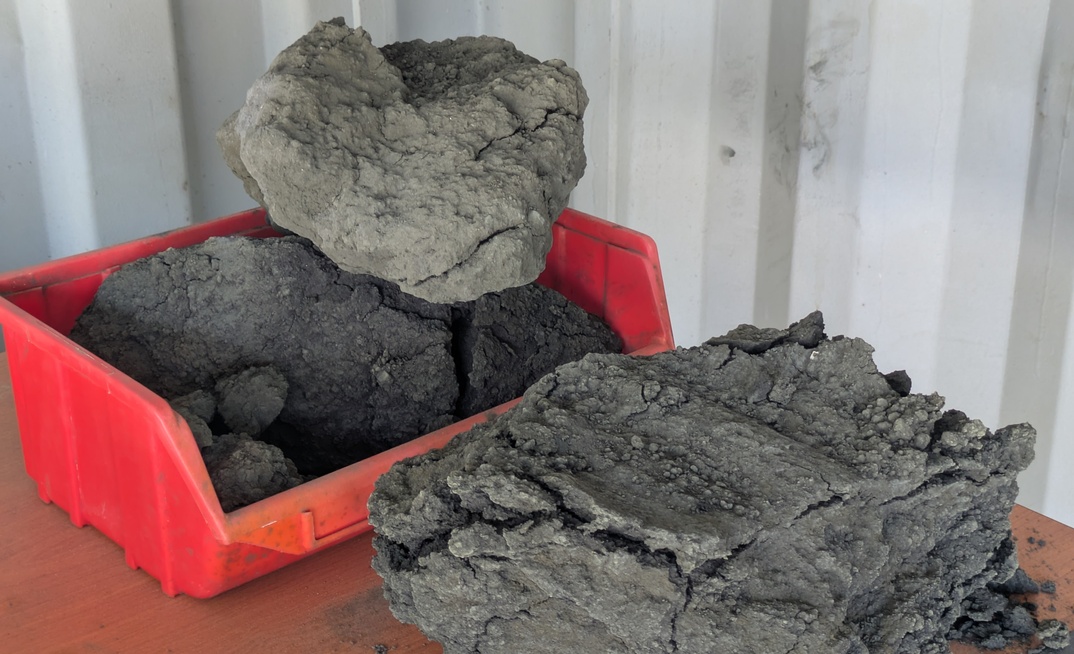
"The main issue is that chemical reactions created a 1m thick crust on the concentrate pile. The optimal humidity for concentrates is 7-8%. This crust lost its humidity, but we cannot rewet the concentrate. The crust is hard like concrete and will be difficult to handle, but it did protect the concentrate below, isolating it and stopping it from oxidising or leaching," said Hubner.
Hubner said the company may need to use an excavator to break and remove the crust to expose the concentrate, then carefully load it into the reclaimer to send into the ship loader. The crust may have to be crushed or otherwise broken down to be exported.
"It normally takes two or three days to load a ship, but we will have to measure everything, so it could take five to eight days," he said.
Fortunately for First Quantum, a lack of copper concentrates in the market and record low treatment and refining charges means it should not have difficulty placing them. "We will do more testing and be open with the smelters about the crust, as this will be new for the smelters as well, but we don't expect to face penalties," said Hubner.
Exporting the concentrates would seem to be the most straightforward part of an eventual mine restart, but the site visit highlighted that even straightforward things depend on completing other more complicated steps in a chain that could choke the best of intentions. For the concentrate export, a choke point could be power for the port and load-out facility.
Powerplant
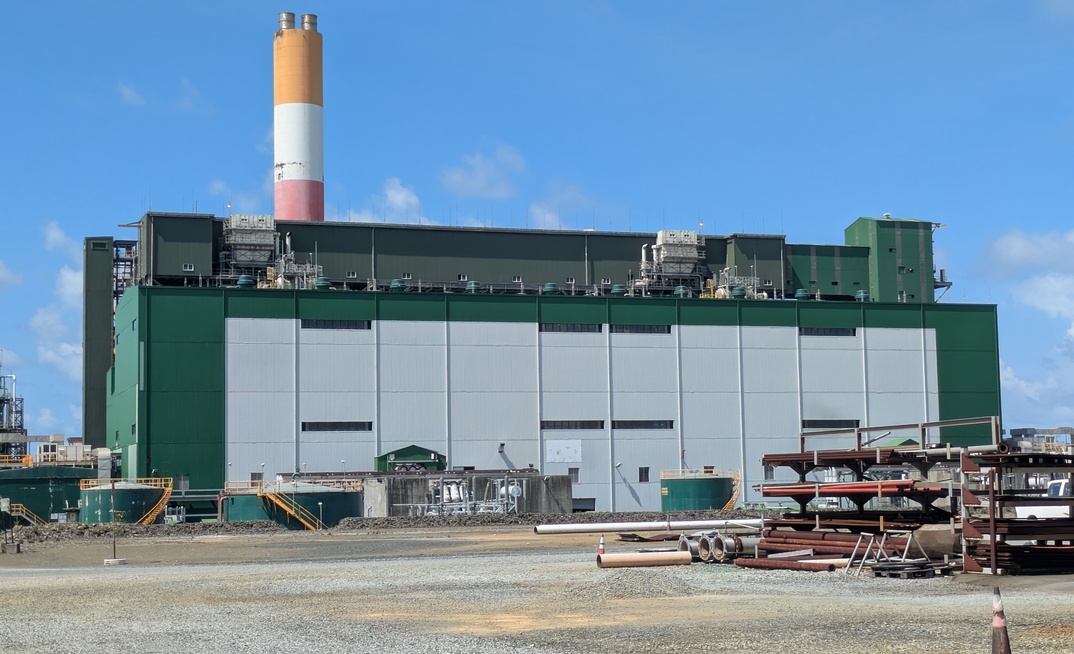
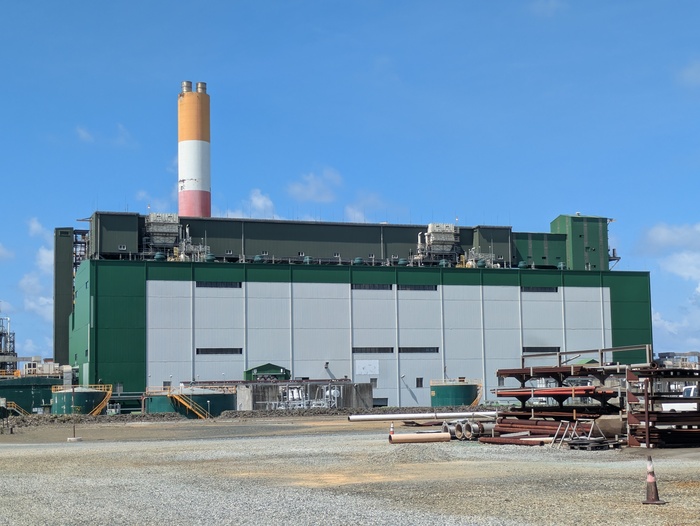
Cobre Panama has its own power plant, which has also been dormant for 16 months. The power plant consists of two 150MW thermal generation units that burn low-sulphur coal from the Cerrejón mine in La Guajira, Colombia.
The $1 billion plant was designed by previous owner Inmet, who had already ordered the long lead items when First Quantum bought the company in 2013. Cobre Panama needed its own power plant due to its remote location and lack of a grid connection.
While coal is no longer the fuel of choice for mining operations, on the positive side, the Puerto Rincon plant is as good as it gets when it comes to thermal power plants. It uses state-of-the-art catalyzer and filtration technology, which, in addition to the low-sulphur Colombian coal, makes it one of the lowest greenhouse gas emitting plants in the world.
President Mulino has spoken of restarting it, but of course, it is not that simple. It is currently unclear whether First Quantum will need to restart it to ship the concentrates or whether it can use grid power.
An official in the company's London headquarters told Mining Journal that the ideal scenario would be for the power plant to be available to export the copper concentrate, although uncertainty on its start-up (see below) means it may not be available in the timescale required, meaning the company will likely explore options to undertake the export using grid power.
In Panama, company officials said it is unclear if this option is on the table until the government defines what the pathway forward will be.
For First Quantum to power up its plant, it would need to import coal as its coal warehouse is empty. Cobre Panama operations stopped on 26 November 2023 when its coal ran out, which was two days before Panama's Supreme Court ruled First Quantum's operating contract unconstitutional.
Shipping coal to Puerto Rincon may be relatively straightforward, but unloading it will require the company to use grid power. The power plant has been sitting for 16 months, and it is unknown whether it can be restarted and achieve steady-state operations again.
First Quantum will not know this until it tries to do it, a major point of uncertainty. Another major unknown is the cost the company will need to incur to try and bring the plant back on line. "The plant's boilers are designed for continual operation to provide steady power.
Everything must be 100% steady for us to use the power, but it is located next to the sea, a challenging location from a preservation viewpoint. We have undertaken a preservation programme and with the information we have, in consultation with the company that built it, we believe we have done the right thing, but there is uncertainty about heating it up and getting it to steady state," said Hubner.
The power plant could be a litmus test for a speedy mine restart. If it requires a major investment, in the hundreds of millions of dollars, would First Quantum make it?
In the longer term, as Cobre Panama is connected to the grid and there are new power developments elsewhere in the country, the mine could potentially get its power from other sources in the future, which could also lower its power costs.
For example, in 2024, the 670MW Gatun natural gas power station was inaugurated. Will concentrate export and mine restart have to wait until Panama's grid has enough capacity available for it?
Plant restart
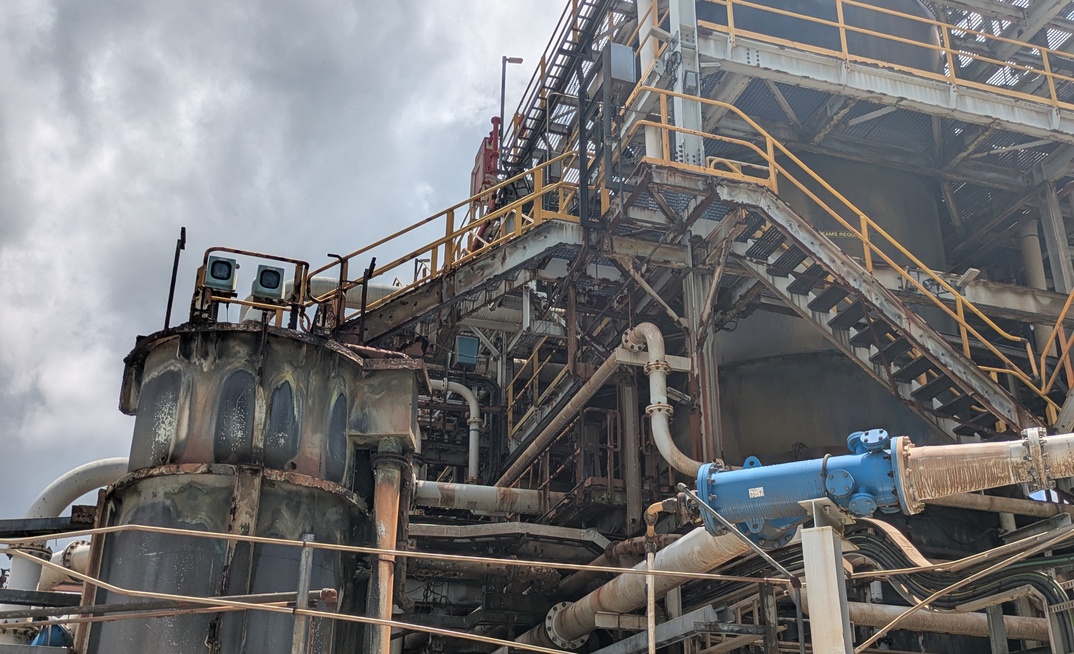
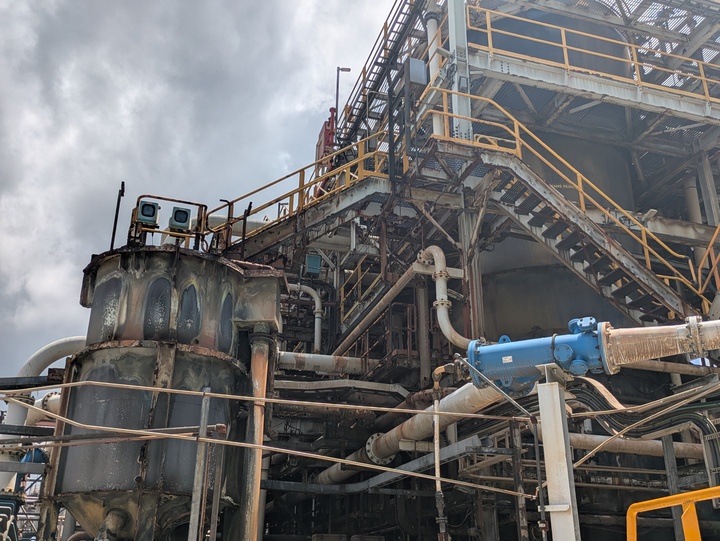
The clock is ticking on whether Cobre Panama can be restarted, as its equipment and plant cannot sit idle indefinitely before deteriorating to a point of no return. Unlike a mine start, when everything is new, shiny and reliable, a restart will see degraded equipment turned on with a level of uncertainty about whether it can return to operating condition. Some damage will not be identified until equipment is stressed in an operational context.
To manage risk, the company implemented long-term and short-term preservation plans to maintain equipment in optimal conditions for as long as possible. With uncertainty over whether the mine will ever restart, the company stopped buying spare parts, and as replacement inventories are used, the backlog of pending maintenance tasks now numbers thousands, potentially compromising viability.
"The biggest challenge was that the shutdown happened overnight, with no transition. We had partial operations during COVID-19 and the government contract negotiations, but with this, we had to stop dead with the uncertainty of when we would restart.
We produced 85Mt for three years, grading about 0.5% copper, so we are not even close to depleting the resource or closing the mine. These assets are supposed to be used 90% of the time. They weren't built to undergo long-term preservation," said Hubner.
The preservation strategy includes periodic inspection, testing, and running of mobile equipment every few weeks. "When we find things that need to be fixed, if we have the part and the people, we fix it, but generally we don't, which creates a backlog.
It was manageable at the beginning but is getting worse. It is a ticking clock that could reach a point where we won't be able to restart because of the amount of work and investment necessary. Even the smallest piece can create a big mess. What happens when there are 10 million bolts that start failing? This is something the government and public need to understand," said Hubner.
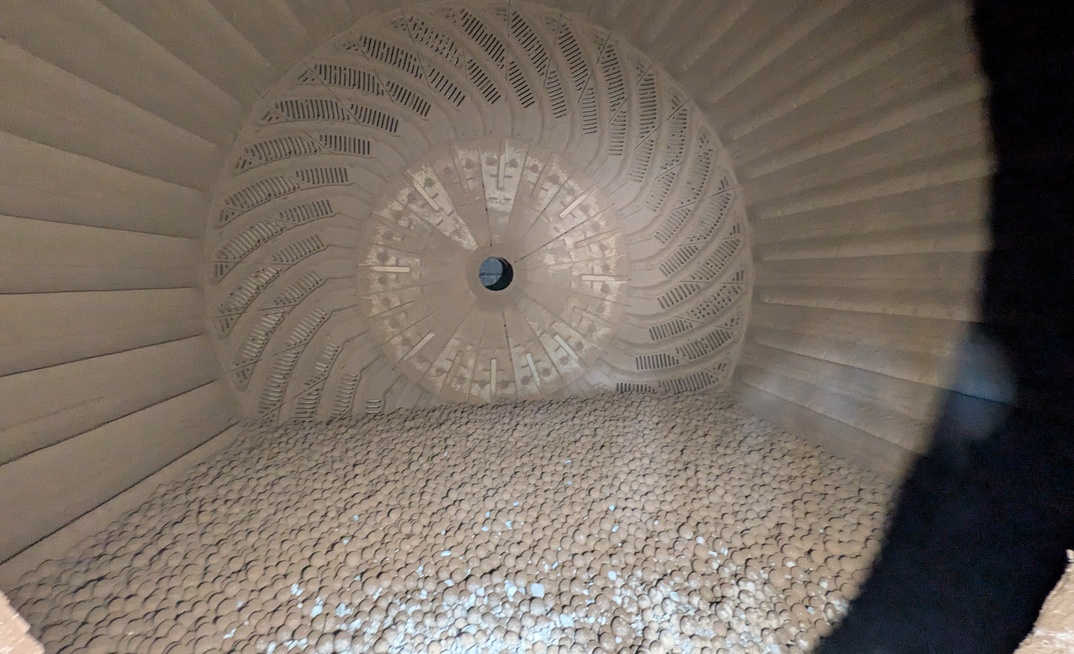
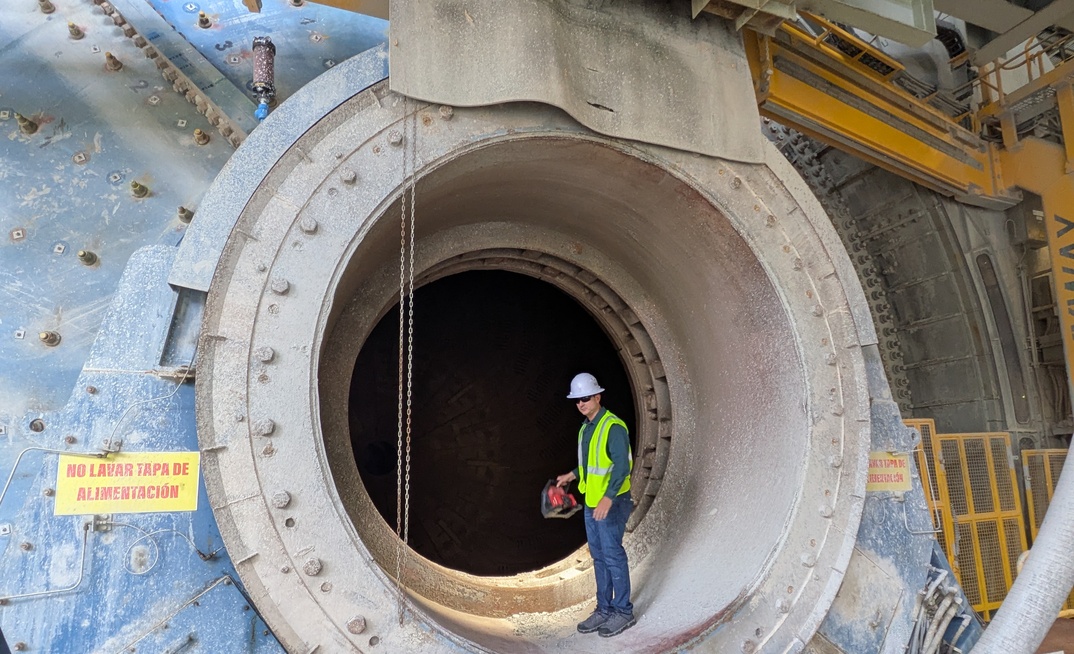
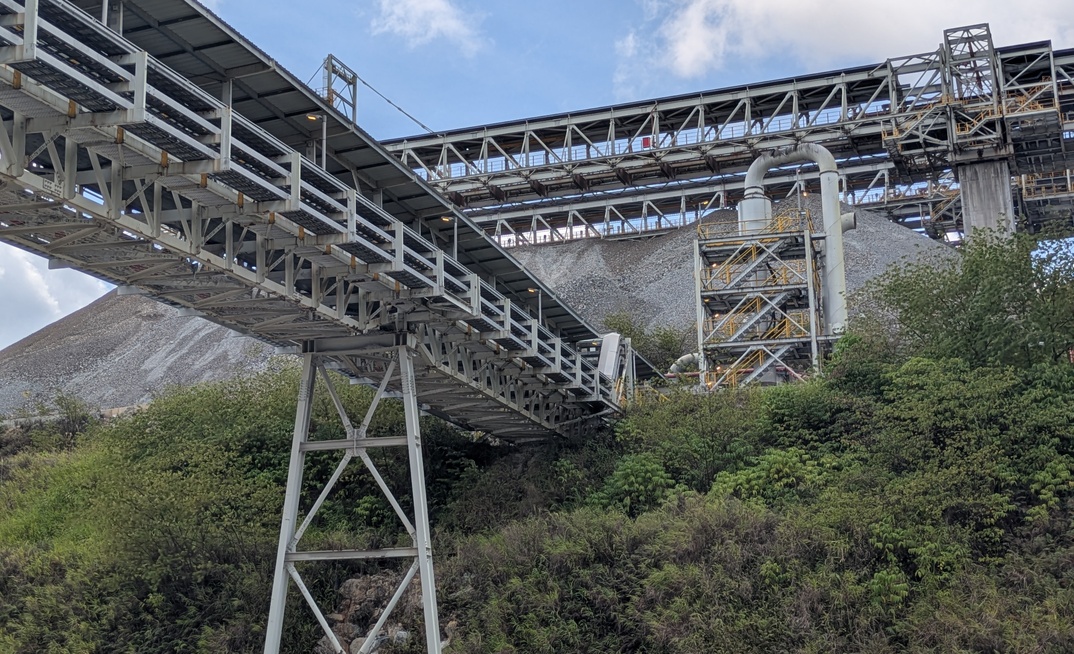
Cobre Panama's mill has three process lines, each with a 40ft SAG mill and ball mill that usually processes 3500tph of ore. The SAG mills are the second largest in the world and are electromagnetic, using magnets to power their rotation without a gearbox.
This makes them the highest power consumers of the operation at 28MW per mill. The plant uses 260MW of the operations' 340MW power demand. "Panama uses 1600MW, so this mill building represents 15% of national energy consumption," said Hubner.
The preservation of the 40ft SAG mills saw 70% of the grinding media removed, and the mills are turned every two weeks and left in different positions to avoid deformation of the frame. Hubner thinks the level of deterioration is not yet prohibitive to a restart, estimating that returning to steady state production of 85Mtpa could take six to nine months.
"There are many small pumps, sensors, instrumentation, bolts and belts that could cause stoppages."
"The question is, at what point would we risk going to full milling rate? If the backlog keeps growing, we may have to revisit that restart timeline, which is why there is a clock ticking," he said.
The inference is that if restarting requires a large investment, coupled with the uncertainty that there may still be ongoing problems for a long time, there is a tipping point at which it makes no economic sense to continue.
Mine
Before the stoppage, Cobre Panama was expanding from 85Mtpa to 100Mpta, which saw it install the largest screening plant in the world to bypass fine material from the primary crusher straight into the process plant to increase efficiency and throughput.
The company also planned to install a molybdenum recovery plant, which is sitting on the Puerto Rincon quay, as the mine shut down before it could be installed.
The mine also has stoppage issues to contend with. The Botija pit has been the main source of mineral since the start of operations. It has two main primary crushers and two in-pit semi-mobile crushers that were in the process of being relocated to the second pit, Colima, before shutdown.
Valle Grande would be the third pit. Colima will be twice as big as Botija and was due to be the cash flow driver of the operation in the years to come, generating funds that First Quantum had earmarked to build Taca Taca in Salta, Argentina.
With Taca Taca moving closer to a construction decision, possibly costing $3.5 billion to build, Cobre Panama's stoppage has a long chain of impacts. Without the financial resources of Cobre Panama, Taca Taca could well need a funding partner.
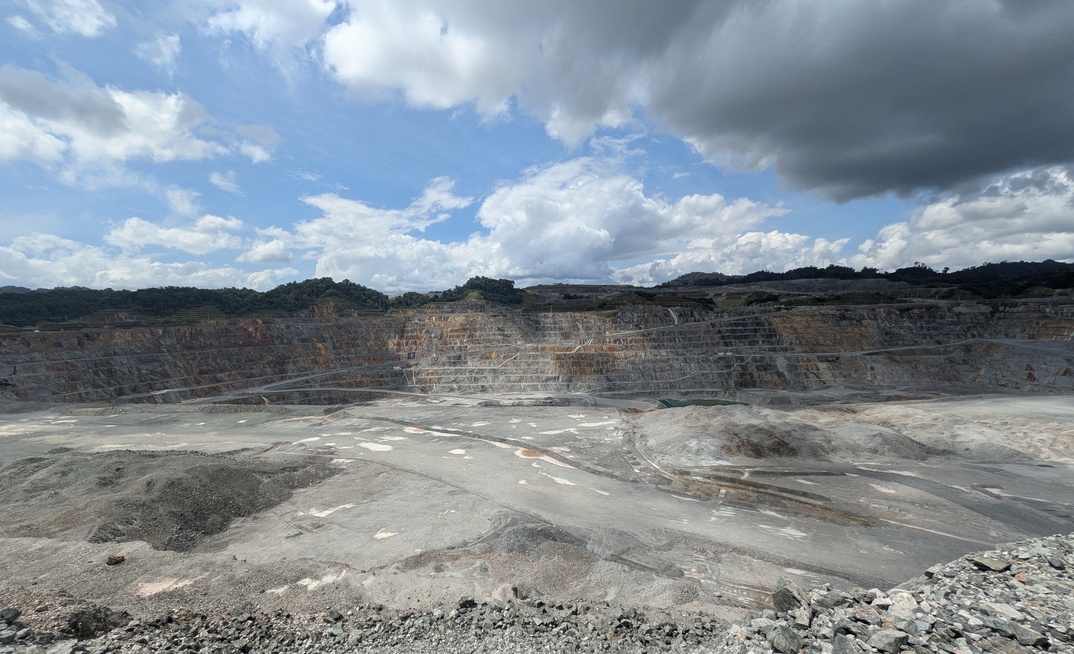
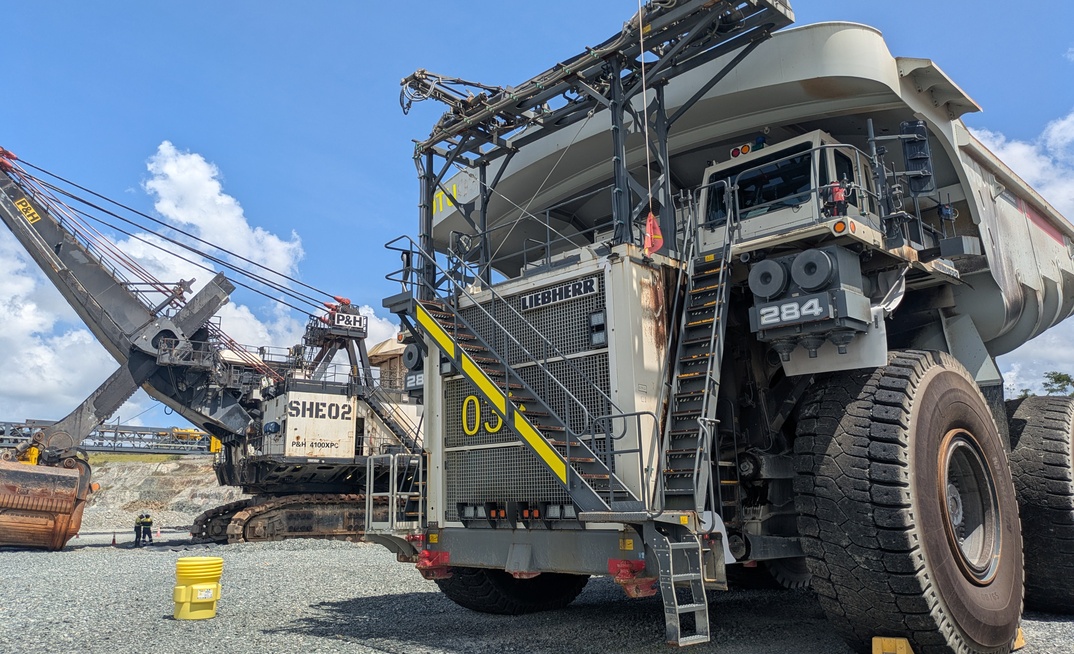
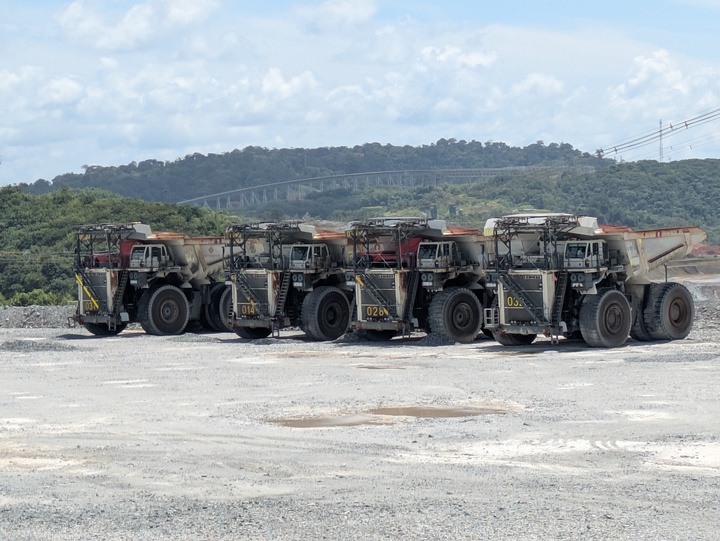
Botija is 2.1km by 2.6km and 190m deep. The width and length have reached their final dimensions, but the pit would be excavated another 150m deeper, providing mineral for another 10 years. Its mobile equipment includes 15 Epiroc production drills and five 1200t electric PH shovels, believed to be the second largest cable-operated shovels in the world, with 90t buckets that load the 360t trucks in four scoops.
The copper in the pit is disseminated, but the amount of waste means that the 300000tpd of ore generates about the same amount of waste for transport to the waste dump.
Botija features a trolley system with the 360t trucks equipped with pantographs. This increases their speed on the 2.5km ramp from 5kph to 20kph and reduces diesel consumption by 90%. "We want to have 10km of trolley-assisted haul in the future and have poured the pads for new pylons. The operation is almost completely electric," said Hubner.
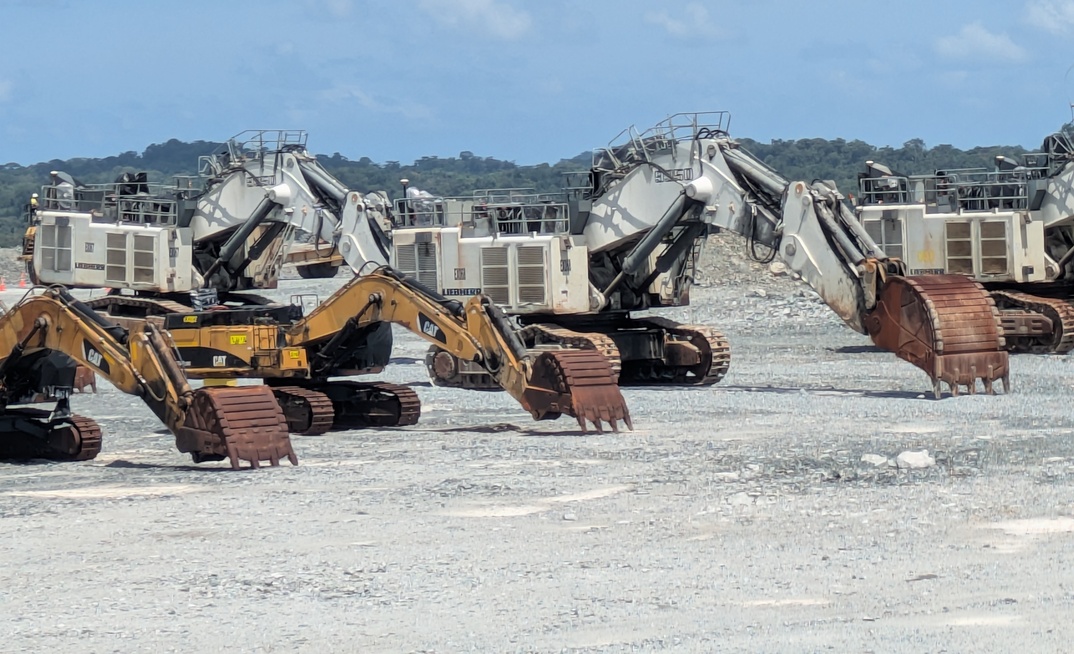
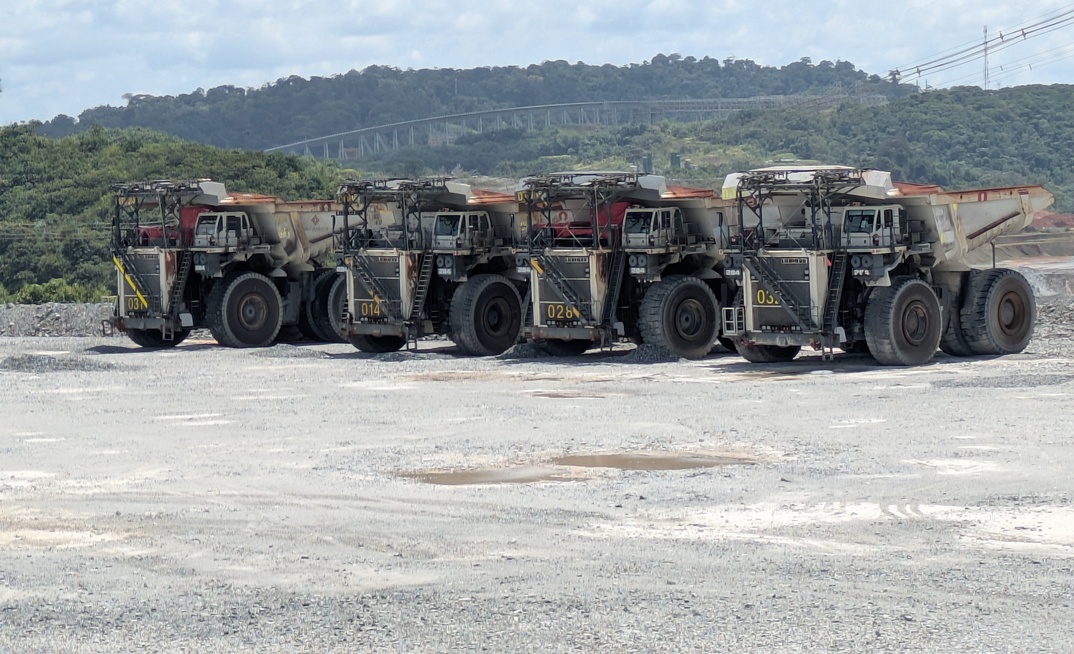
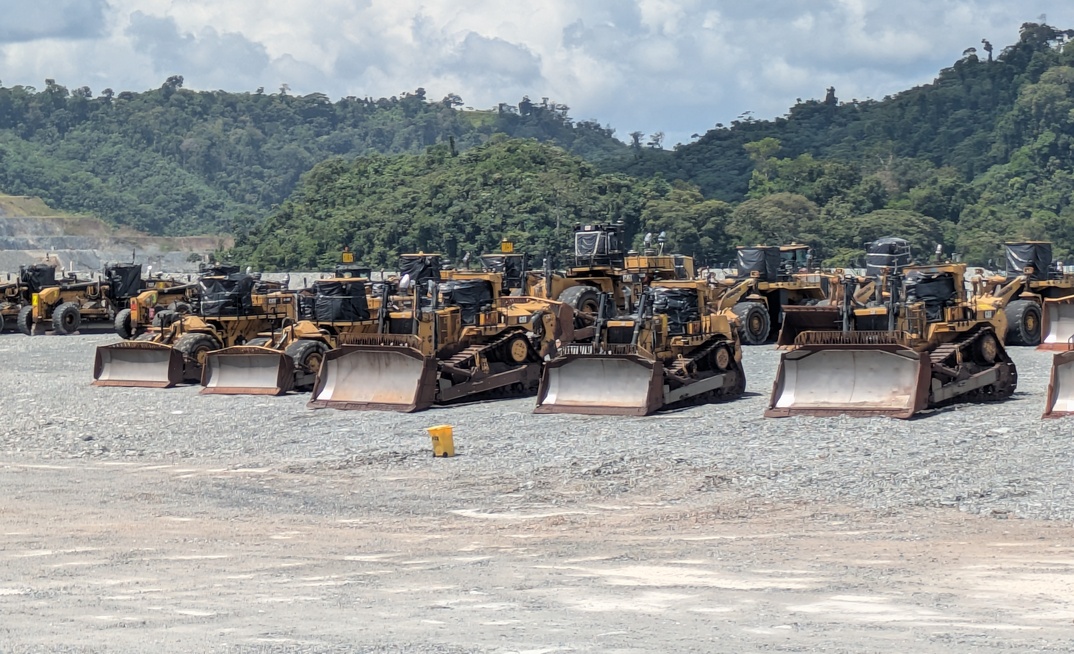
The company adopted a twin strategy to preserve the mine's mobile fleet. Equipment such as graders were put into hibernation, their cabins were closed, sensors and hydraulic hoses were removed, and their frames were mounted on steel supports to prevent deformation from sitting.
Every six months, they are reconstructed and run. The haul trucks are run every 4-6 weeks. The shovels are continually plugged in to prevent moisture from entering their circuits and sensors. Hydraulic hose failure is expected to be the main restart issue. "They will have a high-frequency failure rate. They are easy to fix but a pain," said Hubner.
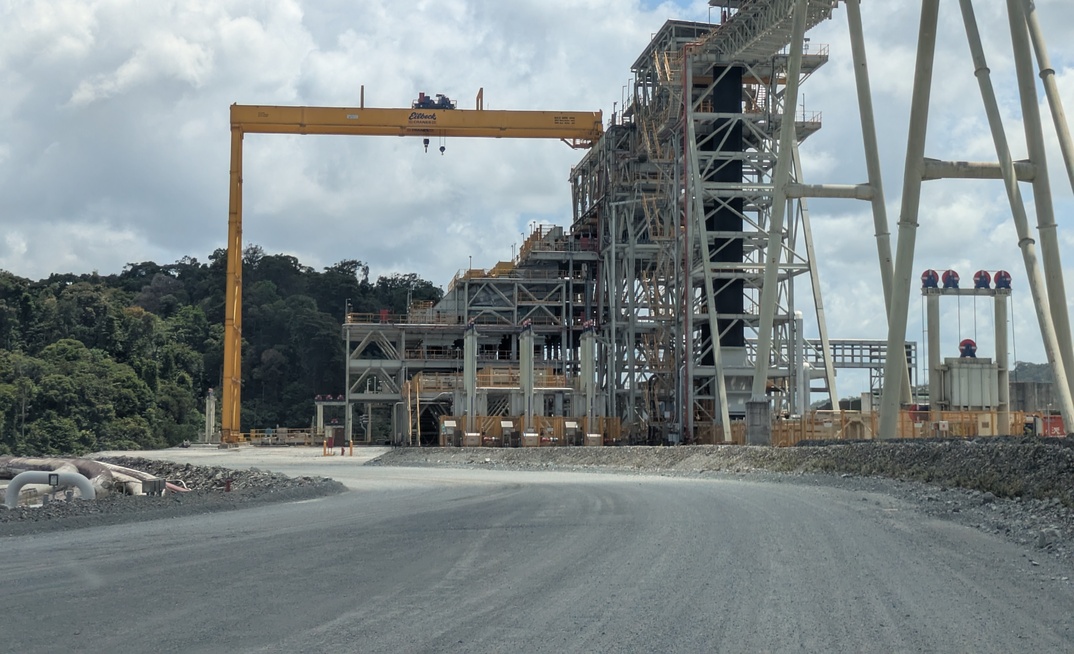
The lack of noise and movement as the equipment sits and rusts is disquieting, particularly when one considers that each truck represents three operators, three mechanics and three electricians who are without work. The call of howler monkeys in the distance echoes the wailing in many Panamanian households due to the mine's closure.
The copper concentrate stockpile has been a news focal point, but other material handling issues are also urgent. There are 500,000 tonnes of material waiting to be fed into the plant in the short-term stockpile and millions of tonnes of blasted material sitting in the pit and in the long-term stockpile.
These are all exposed to the environment and could leach metals or create acid drainage issues.
"We can't leave those piles there forever. This material needs to be processed to reduce the risk of metal leaching. The government understands this but it needs to find a way to authorise processing in a way that environmental activists could not say it is masking a mine restart," said Hubner.
Water
Water quality issues were one of the concerns anti-miners voiced, yet ironically it is one of Cobre Panama's greatest strengths. Hubner is a Chilean civil engineer who specialises in water and tailings management. He began his career consulting at several copper mines in Chile for Schlumberger before his move to Panama and has been at Cobre Panama for 6.5 years.
"From being worried about where every drop of water is coming from in Chile to having too much water is quite a change," he said.
Water is a significant issue for the mine as it rains 300 days a year, giving it an extremely positive water balance.
"We obtain more than twice the water we need from rainfall," said Hubner. Anti-mining protestors conflated the mine with the drought affecting the Panama Canal, which the company shows visitors is 60km and three watersheds away.
"There was an idea of developing a tunnel to move our excess water to the Canal, but it was so expensive, would have been a nightmare to permit, and at the end of the day, the 100 million m3 per year we have to discharge is only about a week's worth of Panama Canal operations, so it is immaterial," said Hubner.
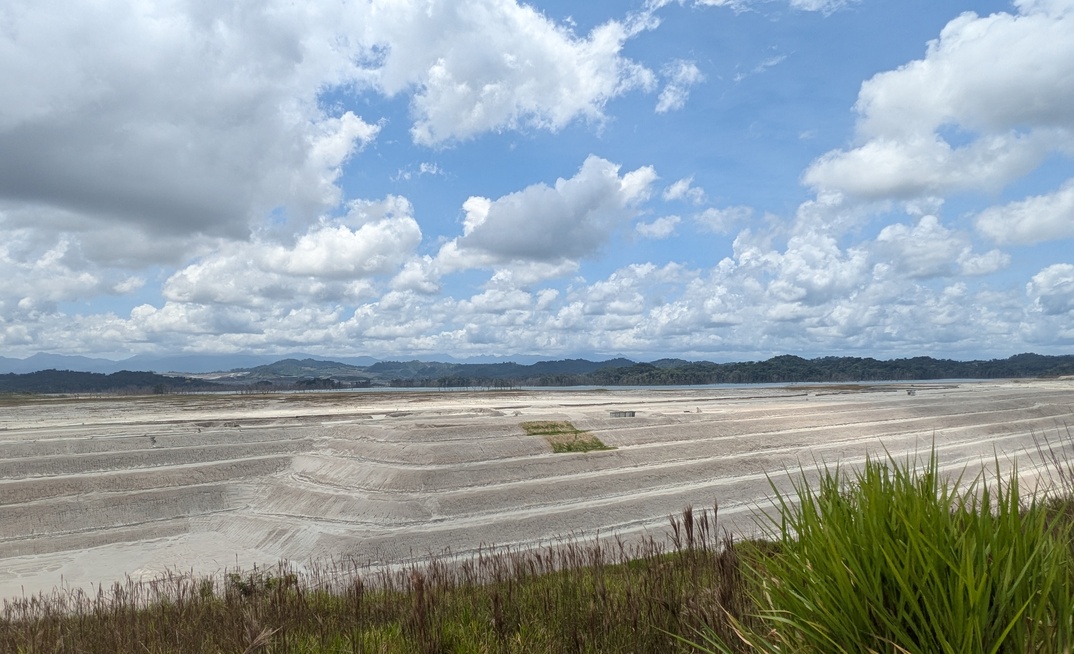
To manage water, First Quantum built one of the best tailings storage facilities (TSF) in the world and one of the largest centreline TSF anywhere. The TSF is built from compacted tailings in benches with a 3:1 slope angle.
The tails are excellent construction materials, and the company deposits 8 million m3 of compacted tails a year. The dam is about 60m high and, with at least one lift a year, would eventually reach a height of 146m, enough to store 17 years of tails before the Botija pit is exhausted, which will then be used for backfilling tailings.
Preservation activities include actively repairing erosion from rainfall and annual inspections by an external engineer of record.
"[the engineer] came in February and said the dam is completely stable and one of the best facilities he has seen in his 25 years of experience. Everyone involved is proud of what we have done," said Hubner.
The Cobre Panama plant uses few chemical reagents other than lime for water pH conditioning, leaving inert and non-toxic tails, as evidenced by vegetation growing spontaneously on the dam.
"This proves how easily the closure and rehabilitation of the area will be. We have tested hydroseeding and that works well. We have all the right conditions to close the facility, and at the end of operations, this should look like a forest," said Hubner.
The spontaneous vegetation is deceptive in that, while the TSF is under active preservation, it is not apt for closure. "The size of the facility means we need more sand to close it, in addition to rip rap to protect against erosion. The only way to do that is to resume mining operations as it requires so much material that it would be impossible to source that elsewhere," said Hubner.
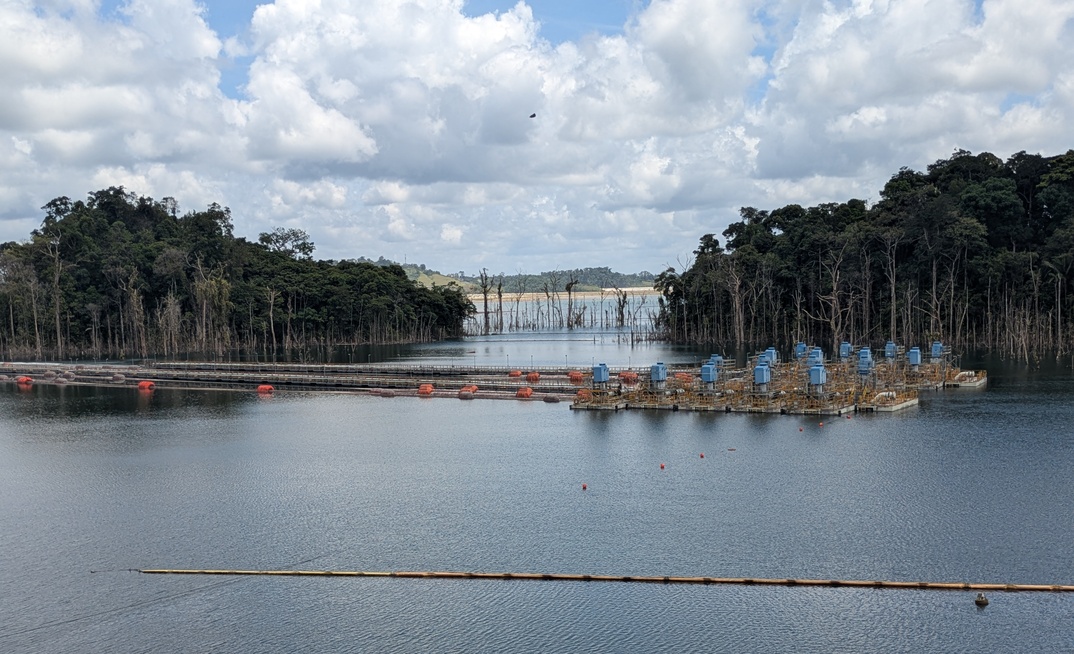
Adjacent to the TSF is a pond from where tailings water is recirculated 5km to the process plant. The pond provides habitat for fish, alligators and aquatic birds. The TSF uses a passive water discharge system requiring no power or water pumping and which can handle up to 70m3/s. It is designed to work under extreme rainfall conditions, including worst-case scenarios.
"A large rainfall event is 250mm in 24 hours. A 1000-year event is 450mm a day. This is designed to handle 900mm a day and 1600mm in three days, which is equivalent to Hurricane Katrina. Water won't ever overtop the embankment. If it starts raining, no one needs to come and push a button to make something happen. This solution is brilliant. If it starts raining hard, I can sleep at night because the company designed it to be one of the best in the industry. It brought together a team of experts, including myself, for its construction," said Hubner.
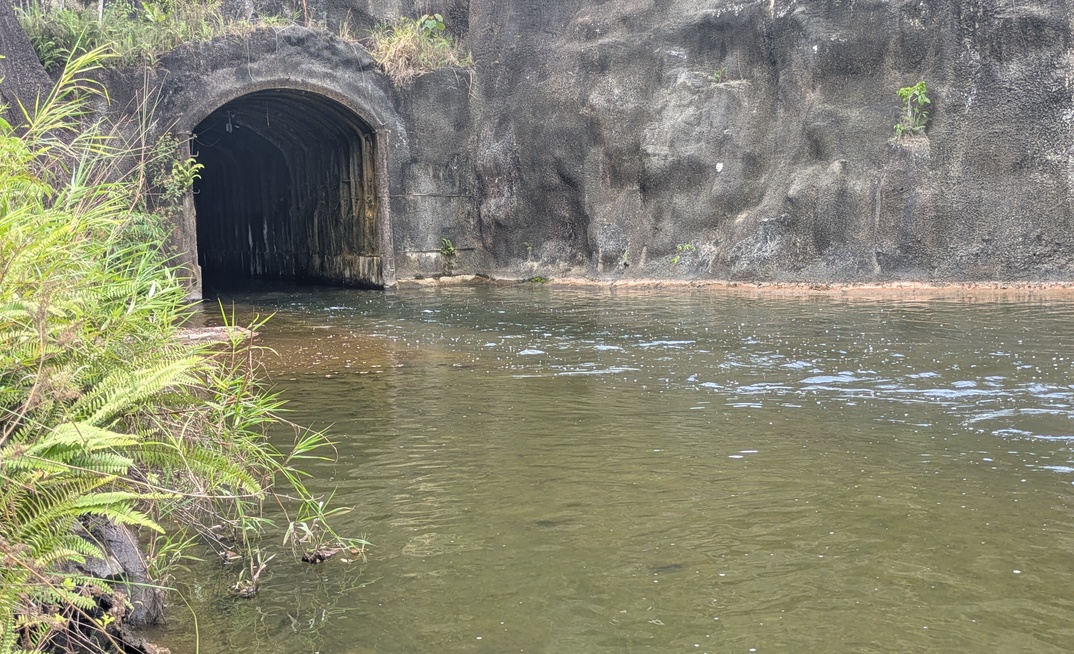
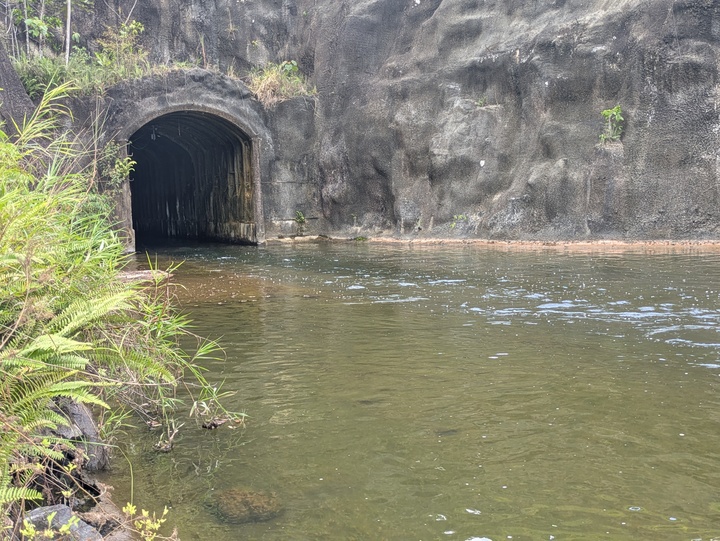
Excess water flows unaided through a 1.2km tunnel under a hill for discharge into a stream. Fish, lizards and other wildlife are clearly visible in the stream the tunnel discharges into, where local communities work with an NGO to undertake their own water sampling and monitoring programme.
The company has also reforested over 3000 hectares near the mine and more than 4000 hectares outside the mine in various provinces under a voluntary 10000-hectare initial commitment. The mine access road features 22 underground animal crossings and three aerial crossings.
"This is part of the Mesoamerican corridor. The crossings are not randomly placed. We studied where animals were moving for a long time and put these in their natural corridors," government affairs specialist Nestor Solis told Mining Journal.
Camera traps show they are used and that there are 32 species of interest including jaguar and tapir. The company has also collaborated with NGOs to help preserve species such as harlequin frogs, harpy eagles and turtles.
Zeitgeist
The Cobre Panama stoppage occurred within a zeitgeist in Panama of perceived political corruption, lack of transparency, and poor economic management, which left the population rejecting and opposing everything.

Cobre Panama's new contract negotiation concluded in this environment in March 2024 and became a focal point as political tension mounted ahead of a presidential election. The opaque process led people to question whether the negotiation was clean or corrupt.
Environmentalists and those seeking political gain added their voices, escalating things to the extent that the Supreme Court reviewed the new contract, declared it unconstitutional and forced former president Laurentino Cortizo to shut the mine.
The negative public reaction began months after the government contract was concluded but when it came, it was too fast for First Quantum to react.
Like most miners, the company has maintained a low profile even though many aspects of its operation are world-leading because it went the extra mile during design and construction, such as its water management system, mine electrification, and access road development.
Panamanians had little idea about the company or the mine and were wont to believe social media posts about environmental contamination and destruction.
Since the closure, the company has ramped up its public outreach with a strategy called Cobre Conecta (copper connects), which sees representatives from many of the mine's different departments talk about various aspects of its operations. "We have undertaken a lot of public relations in shopping malls, universities, fairs, anywhere we can," said Solis.
A year ago, First Quantum began taking the public on visits to see the mine and its impacts for themselves. The government initially stopped this, presumably as it wanted to control the Cobre Panama narrative, but they have restarted with the company targeting 2000 visitors a week.
"People have responded. They want to hear directly from the source. The protestors' narrative was that the mine was contaminated, so the public asked about environmental and reforestation the most. Following the visits we have a 92% positive perception about the project as they realise they were so misinformed before," said Solis.
Mining and politics
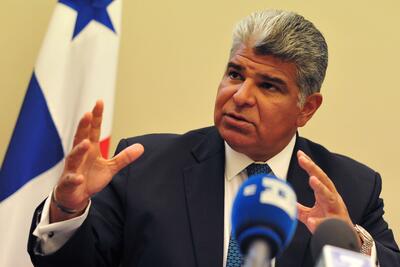
President Mulino was previously deputy president under Ricardo Martinelli. Mulino has distanced himself from his former political mentor, who is still holed up in the Nicaraguan embassy in Panama City, facing money laundering charges.
He walked back Cortizo's rhetoric on Cobre Panama. With the entente softening around the possible export of the stockpiled concentrates, there is a suggestion that there could be a political path back to production.
Mulino is reported as being a single-minded, non-multi-tasker who tackles one issue at a time.
This can be seen in his determination to not address Cobre Panama until a social security reform was completed, which was approved by the legislative assembly on March 13. He wasted no time changing tracks, doing so the day the legislative assembly passed Bill 163, the social security reform, by stating he would allow concentrate exports.
This was quickly followed by First Quantum stating it would drop its arbitration claim.
It is unknown whether Mulino and his administration truly appreciate that there may be a time-based point of no return for restarting the mine.
However, Panama's economic situation is forcing his hand. Growth slowed in 2024; the fiscal deficit widened to 7% of GDP, government debt and interest payments increased, and unemployment was around 7%.
The closure of Cobre Panama coincided with a drought-induced reduction of income from the Panama Canal, which it is still recovering from. The mine produced 1% of the world's copper, employed 7000 direct and up to 50,000 indirect employees, and represented 5% of Panama's GDP.
Its closure put a brake on the economy and saw ratings agency Fitch downgrade Panama's credit rating to BB+ from BBB- in March 2024, followed in November by S&P Global Ratings making the same downgrade, while Moody's cut its outlook to negative. Panama may need Cobre Panama to restart, but does Mulino have the political capital to do it?
Communities in Colon and Coclé provinces appear to want a restart judging by hand-painted signs along the mine access road, which read, "No queremos ambientalisitas que nos quitaron el trabajo" (we don't want environmentalists who took our jobs) and "abran la mina ya" (open the mine already).
The election of Donald Trump as US president has increased pressure on Mulino with comments about the US retaking control of the Canal and reducing Chinese influence. This will see US firm BlackRock buy a majority stake in Hong Kong's CK Hutchison port company for $22.8 billion, which operates ports at either end of the Panama Canal.
The ports and Canal are separate, but the fact that Trump prompted change has created a perception that Mulino is weak.
"In politics, perception is reality. People feel Mulino is Trump's puppet, that the social security law is not a good law, and the relationship between the Deputies and Mulino is not well-received. People don't believe in government, the national assembly, or First Quantum, so the road ahead will not be easy," a Panama City-based political risk analyst told Mining Journal.
According to CID Gallup (February 2025), Mulino enjoys a relatively high public approval rating of 51%, possibly boosted by his defence of the Canal, which stirred nationalistic feelings. The road from Tocumen International Airport into Panama City is lined with Panamanian flags, put out ahead of a visit by US Secretary of State Marco Rubio in early February.
Beyond the fate of the concentrates themselves, the process will establish a working relationship between First Quantum and the Mulino administration.
The last contract took months of negotiation to complete. With every twist and turn likely to be front-page news, undertaking negotiations under intense public scrutiny and in a publicly transparent way will be challenging. And of course, there is the question of whether they can be concluded in time to save the mine.