



The European Commission yesterday announced funding of up to €3 billion (US$3.5 billion) for 2026 and regulatory fast-tracking for strategic projects that can rapidly produce critical raw materials (CRMs), as it adopted the ReSourceEU Action Plan strategy.
Announced by EC President Ursula von der Leyen in October, ReSourceEU will act as the continent's guide to mitigate its exposure to imported critical minerals, and accelerate the implementation of its Critical Raw Materials Act (CRMA).
With European industry scrambling to secure permanent magnets following China's export restrictions, and fearful of access to other crucial industrial minerals, the plan aims to have a near-term impact in the EU, and to "signal to markets a new policy direction for the medium term".
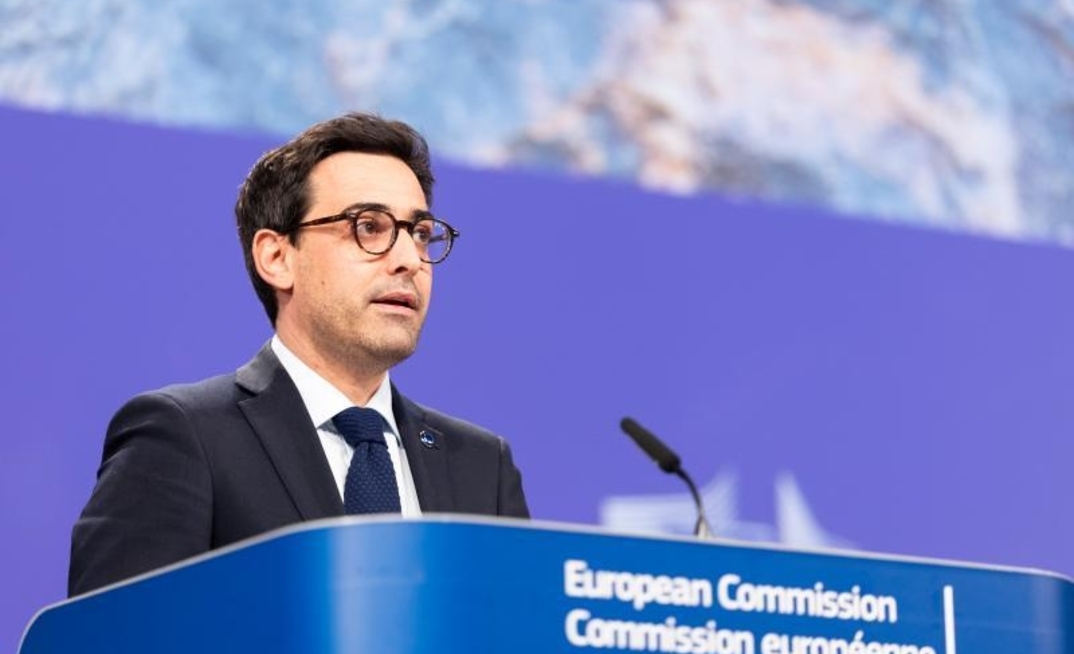
"Today, Europe acts on its independence in critical raw materials," said Stéphane Séjourné, EC executive vice-president for prosperity and industrial strategy.
"With the RESourceEU Action Plan, we are equipping ourselves with the tools we need to accelerate our own production, and diversify our supply, of critical raw materials."
Séjourné highlighted the new financing and regulatory improvements along with "reinforced" international partnerships. ReSourceEU also calls for the establishment of new EU bodies and continent-wide rules on certain scrap CRMs.
"In this global race for the materials our industries need the most, RESourceEU is an engine of our industrial sovereignty. A cornerstone of Europe's economic security," he said.
Strategic projects
The EC has targeted a sub-group of the 60 previously announced strategic projects under the CRMA to rapidly reduce its import dependency on battery, rare earth and defence-related raw minerals.
These projects require €2.15 billion in capital and operational costs to begin production in the "very short term".
Support for two priority projects was announced with ReSourceEU's launch.
Vulcan Energy's Germany lithium extraction (and geothermal power) project will receive €250 million from the European Investment Bank (EIB), and Greenland Resources' molybdenum mine in Malmbjerg, which could satisfy a quarter of the EU's total molybdenum demand.
The EC's first regulatory "debottlenecking" action would be to accelerate environmental permitting, particularly for projects designated as strategic under the CRMA.
It has also identified the need to harmonise its water policy with the CRMA, and will re-examine its policies on the protection of workers, health and the environment.
International vision
The EC said it would use partnership agreements to deepen cooperation with like-minded resource-rich countries.
It has already concluded 15 such agreements with countries, most recently with South Africa. It is targeting an agreement with Brazil next.
ReSourceEU also identified integrated critical raw materials value chains in Ukraine, the western Balkans and the Southern Neighbourhood (a group of ten countries in North Africa and the Middle East) to benefit from dedicated investment frameworks. Phosphate rock and potash resources from North Africa drew particular attention in the plan.
Scrap rules
Scrapped permanent magnets and aluminium will be subject to export restrictions in early 2026, and copper may be added if this proves necessary.
Battery materials were also targeted, with exports to non-OECD countries of waste lithium-ion batteries and black mass prohibited from September 2026, which should benefit Finland's Hydromet battery recycling operation by providing access to black mass.
The EC said it would amend the CRMA to include new product label requirements and incentives to recycle pre-consumer waste for permanent magnets, and may add copper scrap to the list "if this proves necessary".
It said it would close scrap export loopholes and would make it easier to move CRM waste within the EU.
Stockpiling
Other measures include establishing the European Critical Raw Materials Centre, modelled on Japan's Organisation for Metals and Energy Security (JOGMEC), which will help secure critical raw materials for European industries.
This multifunctional body will finance projects alongside private and public institutions, generate market intelligence, and jointly purchase and stockpile primary and secondary CRMs as a supply chain "portfolio manager".
The Raw Materials Platform, meanwhile, will help companies to "aggregate demand, jointly purchase strategic raw materials and secure offtake agreements".