



The following interview is taken from Mining IQ's Leadership Insights 2025 report on unlocking growth. It features exclusive interviews with executives from 17 larger mining companies and the findings of an industrywide survey on the growth theme.
The full report is available for sale here (or free for Premium subscribers).
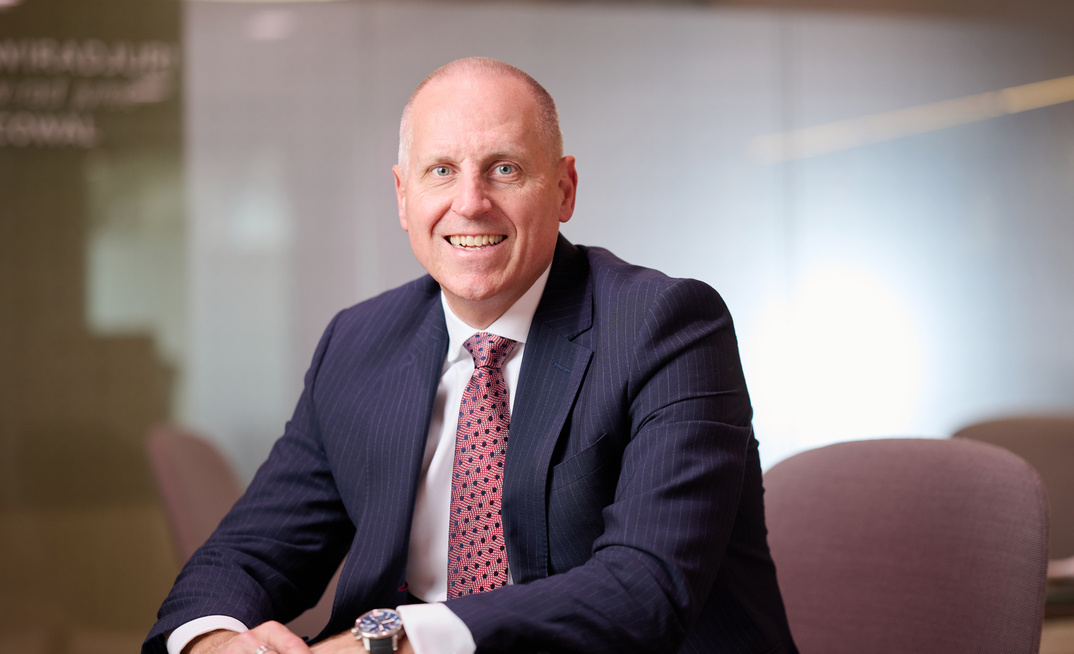
Name: Lawrie Conway
Company: EVOLUTION MINING
Position: Managing director and chief executive
COMPANY PROFILE
Primary listing ASX
Headquarters Sydney, Australia
Market cap US$11.3 billion
Regional focus Australia, Canada
Commodity Gold, copper
Production for financial year 2024 716,700oz gold, 67,862t copper
Please summarise your growth ambitions for 2030.
Our strategy hasn't changed since we started the company in 2011. It's about building a quality portfolio of long-life, low-cost assets that have their own organic growth options.
We've done that consistently since day one. We started acquiring assets in 2015 and selling assets in 2016. Our growth aspirations are to continue bringing assets into the portfolio at the right time and, likewise, selling assets at the right time.
We want to have up to eight assets in our portfolio. We think that's about the right limit to operate, while keeping an attractive shareholder base.
Also, we have many growth options within the assets we have today, so we want to successfully deliver those over the next five years.
What are the biggest challenges to growth, and how will you overcome them?
The first challenge is about safely and consistently delivering year in and year out at our existing operations because that underpins our ability to grow; be it through acquiring assets or investing in major projects in those assets.
That's the first thing we've got to keep going with. We've had a good 15-18 months now, after a couple of years where we didn't deliver to plan.
Looking ahead, the challenge is going to be getting the right people for critical roles, in the semi-technical and technical levels, and keeping that pipeline going. We have seen a decline in students in the technical aspects of our industry, which is a large hurdle for us.
And then there are also the trades people, who are also important, and making sure that there's enough of those available.
The last one is around energy security. It's not so much the transition to renewable energy; it's about ensuring the stability of the energy supply during the period when we transition to renewables.
On the first challenge – delivering safely to plan - we want to keep that daily focus on delivery and controlling the things that we can control, and making sure we're managing and mitigating the things that we can't.
If there's an adverse impact in terms of energy supply, we've got long-term contracts in place with reliable energy providers. But our focus will be more on maintaining that interaction with the regulator and the government, to make sure that they're doing their part to guarantee the security of supply.
On the people front, we're increasing our focus in schools to encourage people to take up mining subjects and degrees at university, and ensuring we promote and support apprenticeships.
Build or buy: Does your growth strategy focus on organic growth or acquisitions?
Our strategy focuses on both. Since 2015, all the assets that we originally owned have been sold, except for Mt Rawdon, and that's ceasing operations soon. Then we will be working with the government in Queensland to transition that to a pumped hydro renewable energy storage project.
This means all the assets we have today have been acquired, so we'll continue along that path. You can't control when assets become available, so we've just got to be ready and able to execute as and when that happens.
On the build side, every asset in our portfolio has growth options, be it in mine life extensions, expansions or new mining fronts. So we'll continue to focus heavily on those organic growth options in the absence of there being an asset that we want to acquire right now.
Our strategy is to both build and buy. Given the very high gold prices, we think now is the time to make money and put that in the bank for our shareholders.
Is a lack of exploration spending holding back mining growth, and how will your exploration plans address this?
There are two parts to the exploration piece. First, the mid-tiers and the major producers are spending a lot of money on exploration, and we're doing the same here.
We'll spend A$70-$75 million on exploration this year, FY25. Where there is a lack of spending is in the junior space, which, for a period, has struggled to access funding.
That access to funding is either through debt markets, capital equity markets, or seed capital from mid-tiers or majors. The real problem has been the high-interest-rate environment. It's been hard for explorers to access that funding.
Also, there's been some unwillingness to engage with the mid-tier and major producers and invite them in as partners, and that's probably what's really been holding back the exploration piece at the current time.
We're excited about our existing portfolio - the potential of Mungari's underground footprint, our addition of underground operations at Cowal and the opportunities in and around Ernest Henry. We've picked land up from Rio Tinto recently and a joint venture at Cloncurry North.
At Red Lake in Canada, we plan to drill at Slate Bay, and we've got joint ventures at Lake St Joseph and October. So that's where we're directing our money.
How big a role will the traditional ‘safe havens' of Canada, the US and Australia play in your growth plans, and why?
We want to stay in Tier 1 jurisdictions, or ‘safe havens', as you put it. That's our focus. We have strategy sessions with the board twice a year and the area that gets the most conversation is about what are Tier 1 jurisdictions.
There are more Tier 1 jurisdictions than Australia and North America, so we have discussions about what other ones we should be considering.
There are quality assets out there. When they do become available, we've got to be ready to transact, but we will very much stay in that safe haven jurisdiction area.
- To access the full Leadership Insights 2025 report click here