

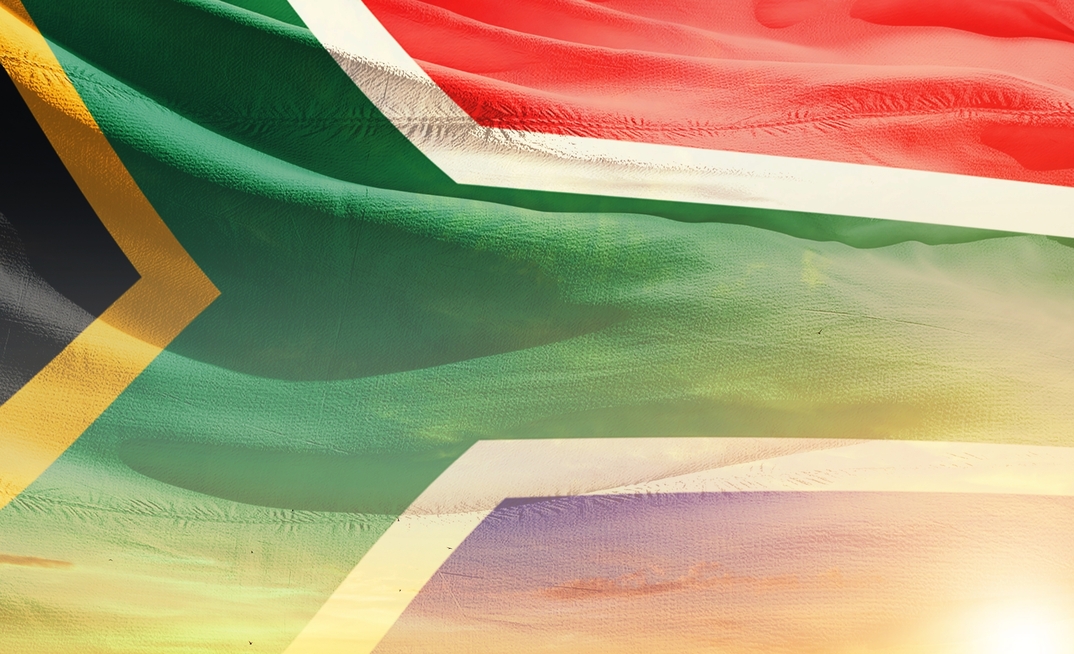


When Anglo American decided to merge with Teck, it seemed to confirm what many in Johannesburg already suspected: the gravitational pull of South African mining has weakened.
The deal will see the company's headquarters move to Canada, its focus shift decisively to copper, and its links to the country where it was founded weakened.
"Anglo has gone from a South African-based company to relocating and diversifying away," veteran South African miner Bernard Swanepoel said.
"But South Africa isn't worse off. The spin-out of Valterra is fantastic for South Africa because now it can make its own capital decisions instead of waiting for approval in London."
YOU MIGHT ALSO LIKE
Swanepoel is well-known for transforming Harmony Gold into one of the world's largest gold producers, and now serves as a non-executive director for a number of African majors.
His pragmatism captures the mood of a sector caught between real geological potential and eroding investor confidence.
Another South Africa veteran and ex-Anglo boss for nearly a decade, Mark Cutifani said without hesitation that mining in the country is 'underrated'.
"I think the rules have got to be clear," Cutifani said. "The government has to think about how you encourage innovation and investment in the sector [...] But I still think there's great potential. How the country can realise that potential requires some additional thought."
In some ways, to ask whether South Africa is overhyped or undervalued requires one to admit that it is both. Overhyped because its constraints are finally priced in; undervalued because its mineral potential remains among the greatest on earth.
Why is no one exploring?
South Africa's ore body remains formidable. The Department of Mineral Resources and the US Geological Survey estimate its reserves at worth more than US$2.5 trillion.
It also holds 88% of global platinum-group metal reserves, 80% of manganese, 72% of chromite, and 13% of gold. For sixteen commodities, the country ranks in the world's top ten by reserves.
Yet exploration, the lifeblood of any mining future, has almost come to a halt.
"In 25 years, we've done next to zero exploration, especially greenfield exploration," Swanepoel said.
"The potential is humongous, but it's been severely neglected [...] We've had a generation of mine managers but not of explorers," he added. "Money goes to where it's welcome. Money goes to where it thinks it can make a return. And money goes to where there are fantastic incentives. Those things haven't really been in place in South Africa."
South Africa's licensing regime, shaped by bureaucracy rather than competition, has turned the process of discovery into one of endurance.
Speaking with Mining Magazine, Mining Journal's sister publication Mhlana Solomzi, a diplomat at the South African High Commission, said that policy uncertainty has compounded the problem.
"If you keep changing policy that has an impact on mining development and exploration, big majors pull back," he said. The result is that exploration capital, which is already mobile, impatient, and small by global standards, has gone elsewhere, mainly north to Zambia and Namibia.
The government now seems to have accepted that it must co-invest in discovery.
The Junior Mining Exploration Fund, launched last year and expanded in September with R240 million (US$13 million) in grants, offers black-owned juniors between R10 million and R50 million (US$574,000-US$2 million) for early-stage work. Successful applicants can convert their grants into equity or profit share if they find a viable ore body.
It is a modest first step, but it could mark a philosophical shift in the country. For two decades, the state viewed exploration as a compliance matter; now it is rediscovering that it is an economic one.
Announced in May, the country's new Critical Minerals and Metals Strategy also places exploration at the centre of industrial revival. It targets lithium, cobalt, manganese and rare earths, amongst other 'critical' minerals.
Another problem seems to be human capital and technology. South Africa's R&D infrastructure was once the envy of the mining world, but it has withered in the face of competition more recently.
Deep-level gold extraction, which once produced a constant stream of technical innovation, has been replaced by decline. Gold production has fallen from 605tpa in 1994 to 133tpa two decades later, even as global prices have tripled, according to the University of the Witwatersrand.
No space for juniors
In any (sustainable) mining ecosystem, a variety of players thrive. But South Africa's junior segment has never recovered from the bureaucratic and financial barriers that made small-scale exploration almost impossible.
"The big ore bodies are owned by majors, and for the juniors there is no space," said Swanepoel. "That pipeline is empty."
Sipho Ngwenya, a junior miner who was once based in South Africa and now mines in Zimbabwe, said that for smaller players, there are friendlier destinations in Africa.
"South Africa doesn't cater for small-scale mining," he said. "That's a big loss. In Ghana and Zimbabwe, artisanal miners are legal and productive. In South Africa, before you even start digging, you've spent half a million dollars on land negotiations and compliance."
Ngwenya's frustration is again with bureaucracy. "A lot of departments are corrupt," he said. "The idea [to mine] is good, but the first thing they'll ask is, ‘What's in it for me?'"
This absence of a functioning junior market could explain why South Africa produces few new discoveries despite its geological richness. Exploration capital flows to places with lower entry costs and clearer tenure.
It also explains partially why illegal mining thrives: small operators pushed out of the system re-enter it informally.
Valterra, the platinum group metals company spun out of Anglo American, offers a partial counterexample.
For Swanepoel, its independence proves that locally run, focused miners can thrive.
"Valterra is the world's lowest-cost, most profitable PGM producer," he said. "Now it can make its own capital decisions instead of waiting for approval in London."
But Valterra could also be the exception that proves the rule. The rest of the sector remains concentrated, cautious, and ageing.
Cutifani's view on Valterra is somewhat different and less of a green signal for South Africa.
"I'm a very happy Valterra shareholder since [Anglo's] divesting," he asid. "I think I've seen a 32% increase in the share price. So very pleased with that. That's worked out well. But what I would say is that I still think there's a strong case over the long term for major diversified companies. That's something that has stood the test of time."
"I would look beyond the short-term pricing cycles, and the Anglo team got a different view."
Ease of operation
The phrase "difficult jurisdiction" has attached itself to South Africa like dust to a drill. Whether that reputation is deserved depends on who you ask.
For Cutifani, it is overstated. "South Africa has challenges," he said, "but the perception is worse than the reality. The world doesn't see the reforms underway."
But issues like corruption and energy outages are tangible hurdles to operations.
"When you have an intermittent supply of power, you cannot operate like that," said Solomzi. "And when Transnet fails, the cost of moving product goes high, and someone has to absorb that cost."
Mining is capital-intensive and infrastructure-dependent. Years of load-shedding, rail congestion, and port delays have eroded margins and trust in the country. Investors who once tolerated inefficiency as the cost of doing business now see it as unpriced risk.
But perception does matter. Global capital is impatient and comparative. If the government can fix logistics and power, it will change sentiment faster than it can change geology. The opening of rail corridors to private operators and the reforms at Eskom are steps in that direction.
The real question is whether these moves will arrive soon enough to reprice the country's risk.
The world is now ordering its mineral supply chains around "criticality." South Africa's new strategy aims to position itself within the realignment by linking mining, beneficiation and trade under the African Continental Free Trade Area.
The country still ranks fifth globally for mining's contribution to GDP, according to GCIS, and remains among the top three producers of PGMs, manganese, and ferrochrome. But without intervention, its position as the gravitational centre of African mining could shift northward.
So, within this context, the answer seems to be that South Africa is geologically undervalued and politically overhyped.
If the government's new reforms can make exploration possible, enable juniors to operate and even thrive, and repair the infrastructure that supports production, capital will return. If not, the country risks becoming a museum of mining, rich in history and poor in discovery.
"After 130 years of mining, [South Africa] has got a much deeper and longer history than most other jurisdictions," Swanepoel said. "There are not many countries where you can say that for 130 years this country has been significant. But the hype is sort of remembering the past."