

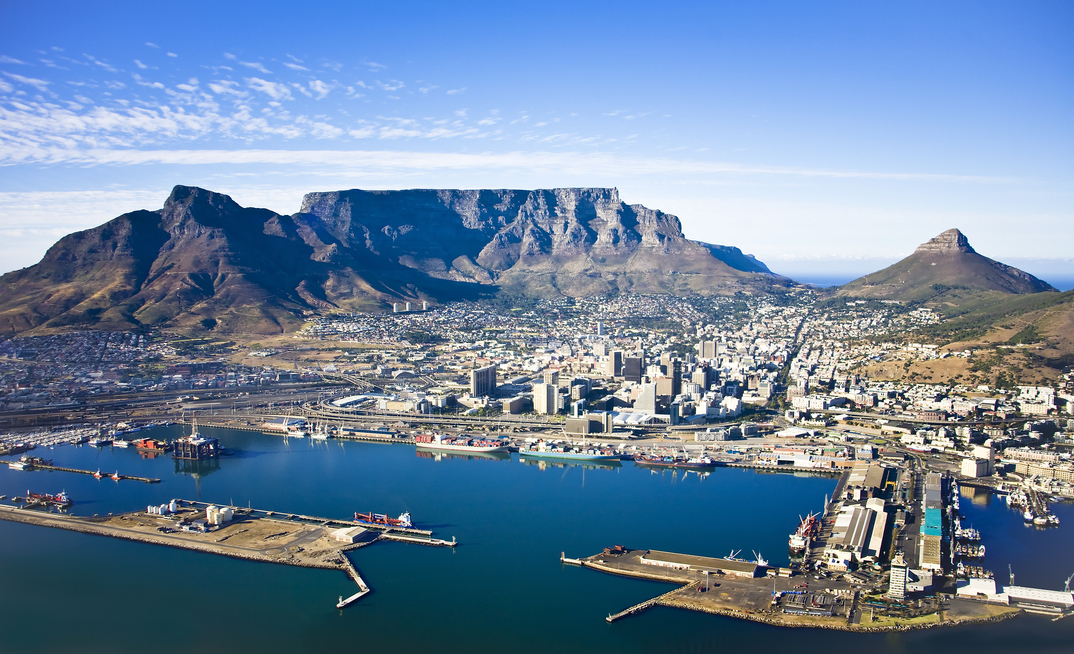


In just under a week's time, the mining industry will congregate in Cape Town for this year's Mining Indaba.
While gathering is still focused on exploration and investment opportunities, it has grown from a platform purely to put juniors in front of investors to one that now looks at the whole spectrum of mining on the continent.
This year, for example, gold sponsors include governments, mining companies, and services, as well as energy companies, infrastructure and logistics providers.
The difference can also be weighed in the agenda. We are not just hearing from companies about operating in Africa, but we are hearing from technology companies looking to expand within the continent - one of the keynotes is by ABB this year - and on deepening Africa's manufacturing supply chains.
Certainly, mining operations across Africa face a unique set of pressures, including energy insecurity, water scarcity, ESG compliance requirements, and rising community expectations.
The exhibition hall is split between equipment suppliers, mining companies, freight providers and industry bodies, as well as governments, mining companies and professional services.
Delegates attending can use networking tools, such as the meeting planners, to get in front of the people they need to see. Meetings are organised in 25-minute slots, and drinks are also provided.
In recent years, a growth in the number of technology companies has been more noticeable.
Last year, 10,500 delegates attended, including 1,450 mining executives, 1,300 investors, 1,400 government officials, and 58 ministers.
Returning presidents
Two years ago, Zambian president Hakainde Hichilema urged the audience to "invest with confidence in Zambia." He returns to address the crowd on the moves the country has made to open up the mining sector.
"We reiterate our message to invest with confidence and power the future," Hichilema told the Mining Indaba in Cape Town in 2024.
This year, he'll talk through how Zambia has prioritised digital licensing systems, improved geological data management, and modernised regulatory frameworks designed to reduce friction for investors while reinforcing effective state oversight.
Hichilema has placed the revitalisation of Zambia's mining sector at the centre of his economic agenda, focusing on building strong foundations through regulatory certainty, transparency, strengthened institutions, and the deployment of game-changing mining technologies to unlock long-term growth.
Hichilema will be joined by more ministers, including King Letsie III of Lesotho, South Africa's Gwede Mantashe, and delegations from Angola, Algeria, the Democratic Republic of the Congo, Egypt, Mozambique, Gabon, South Sudan, Niger, Nigeria, and Zimbabwe, among others.